Once-Weekly Insulin Icodec: A Myth or a Blockbuster in Diabetes Care?
For decades, the daily routine for millions of people living with diabetes has been defined by the tick of the clock. Wake up, prick your finger, take your insulin. Repeat.
So, when the medical community started buzzing about Insulin Icodec—a type of basal insulin that you take just once a week—it sounded almost too good to be true. A myth, perhaps? Or is it truly the blockbuster breakthrough we’ve been waiting for?
Let’s dive into what the science says, who stands to benefit the most, and how it holds up in the Indian context.
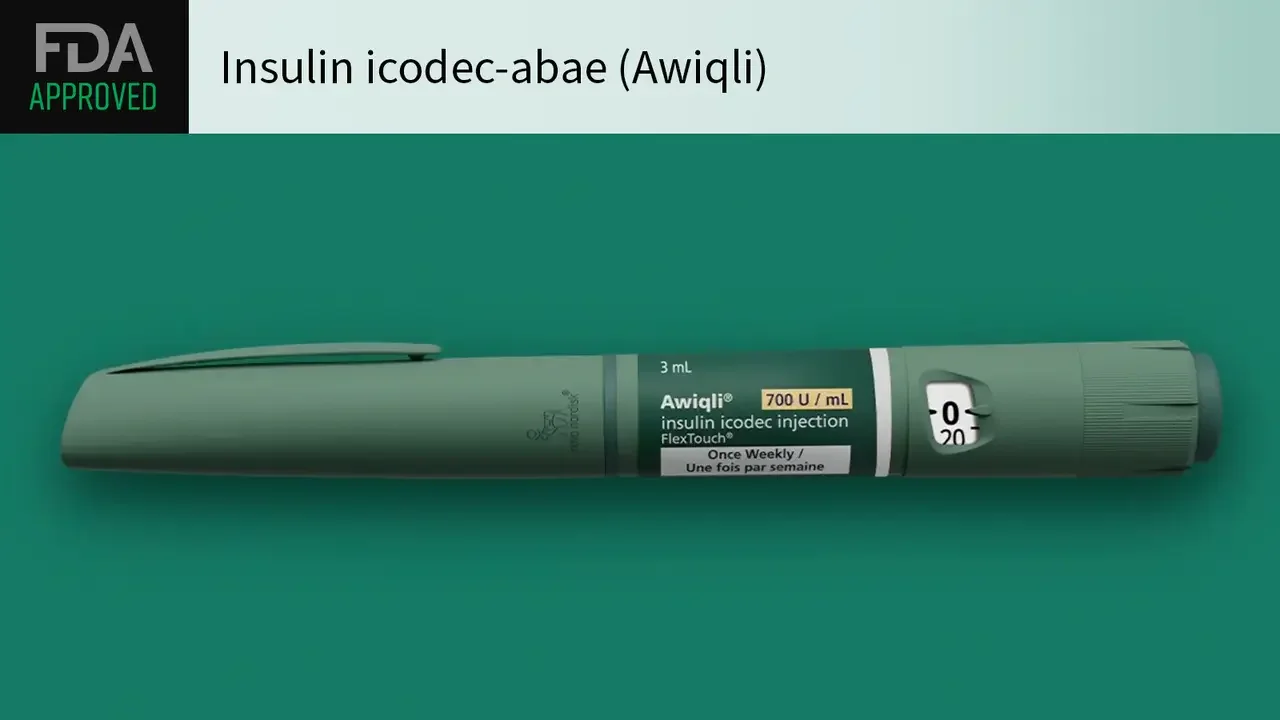
Once Weekly Basal Insulin- ICODEC- Gets FDA approval
What is Insulin Icodec? (The Simple Science)
To understand Icodec, think of traditional long-acting insulin as a slow-dripping tap that lasts 24 hours. Insulin Icodec, on the other hand, is engineered with a clever "time-release" design.
How it works: Once injected, it binds strongly but reversibly to albumin (a common protein in your blood).
The result: It forms a reservoir that slowly releases active insulin into your body over the course of a full 7 days.
Instead of taking 365 injections a year, a patient only needs 52.
Who Benefits the Most? (The Game-Changers)
For a huge segment of the diabetic population, weekly insulin is an absolute blessing. The landmark ONWARDS clinical trial program showed that Icodec is just as effective—and in some cases, slightly better—at lowering HbA1c compared to daily basal insulins.
1. People with Type 2 Diabetes (New to Insulin)
The transition from pills to injections is often met with massive psychological resistance. A once-weekly injection significantly lowers that mental barrier, making it much easier for patients to start the treatment they need.
2. The Busy Professional & The Traveler
If your life involves unpredictable schedules, hectic work weeks, or frequent flights across time zones, managing a daily injection can be a nightmare. A once-a-week regimen offers unprecedented lifestyle freedom.
3. Elderly Patients and Caregivers
Many elderly patients struggle with memory lapses, poor eyesight, or arthritis, making daily dosing difficult. For caregivers, ensuring their loved one gets a shot once a week (perhaps during a Sunday visit) is drastically easier than coordinating daily care.
The Flip Side: Who is it Not Useful For?
While it sounds like a silver bullet, Insulin Icodec is not a one-size-fits-all solution.
1. Type 1 Diabetes (High Caution Required)
People with Type 1 Diabetes do not produce any insulin of their own. Clinical trials showed that while Icodec works for Type 1, it carries a higher risk of hypoglycemia (dangerously low blood sugar) compared to daily insulin. Because the insulin stays in the system for a week, managing sudden drops in blood sugar becomes much trickier.
2. Patients with Highly Fluctuating Lifestyles
If your diet, exercise, and daily routine change drastically from day to day, a fixed weekly dose leaves very little room for day-to-day micro-adjustments.
3. Those Prone to Severe Hypoglycemia
Because you cannot "turn off" the insulin once it is injected, anyone with a history of recurrent, severe low blood sugar episodes needs to approach Icodec with extreme caution.
The Indian Context: Diabetes Data & The Reality Check
India is currently facing a massive diabetes crisis, often referred to as the "Diabetes Capital of the World."
The Numbers: According to the ICMR-INDIAB study, India is home to over 101 million people living with diabetes, and another 136 million are pre-diabetic. Worse still, studies show that a staggering number of Indian patients on insulin do not achieve their target HbA1c levels, largely due to poor compliance (missing daily doses).
In a country where social stigma around public injections exists, a once-weekly discreet dose could drastically improve compliance rates among Indians.
The Cost Analysis: The Ultimate Indian Deciding Factor
In India, healthcare is largely an out-of-pocket expense. Therefore, whether Icodec becomes a blockbuster or a myth depends heavily on the price tag.
The Medication Cost: As a premium, newly launched biological drug, Insulin Icodec carries a higher price per pen/vial compared to older, daily basal insulins (like Glargine or Detemir).
The Hidden Savings: To evaluate the true cost, we must look at the bigger picture. Fewer injections mean fewer syringes/needles purchased, fewer finger-prick strips used for daily monitoring, and potentially fewer hospitalizations due to complications caused by missed daily doses.
For the affluent and middle-class Indian population, the price premium is likely worth the massive jump in quality of life. However, for mass adoption in rural or lower-income strata, daily affordable insulins will remain the bedrock of care until generic biosimilars arrive.
The Verdict: Myth or Blockbuster?
Insulin Icodec is definitely not a myth—the clinical data backing its efficacy is rock solid.
Is it a blockbuster? Yes, but with caveats. It is a lifestyle blockbuster for Type 2 diabetics who struggle with daily compliance, and a medical milestone in pharmacological engineering. However, it will co-exist with daily insulins rather than replacing them entirely, as tailor-made, individualized care remains the golden rule of diabetes management.
Disclaimer: This blog post is for informational purposes only and does not substitute professional medical advice. Always consult your endocrinologist or diabetologist before making any changes to your insulin regimen.